L'Arte di Viaggiare - Art of Travel - Francis Galton
24 August - Leaving Tansen
Namaste Nepal En
Alarm at five, at five thirty I'm at the bus station. I track down the bus for Pokhara, but it has broken down.
I adopt the national attitude, which is that of waiting. Seeing that at the ticket office no-one can tell me how long the wait might be, I, too, move over to the café where all the other passengers have collected.
A little thin Nepalese fellow, who looks only about eighteen but must be considerably older since he's an expert agricultural technician, suggests I go with him: his idea is to walk the two kilometres to the main road from Bhutwal, and wait there for the first bus, which shouldn't be a long wait. I check this out with an American who happens to be at the bus station. He confirms that it's a good idea, it's what he would do in the circumstances. So we set off down the most uneven, slippery, difficult path I have come across in my by now two months of walks in Nepal.
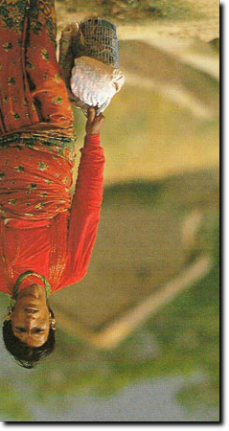
I manage to stay on my feet only by dint of proceeding very slowly and cautiously. Nepalese women, bare foot, pass me left and right. I observe their feet: they are quite different from ours, they are practically triangular, very wide at the front, with toes which are strong and prehensile and grip the ground well. We, with our little buttery feet, outcome of an 'evolution' [or involution?] towards 'civilisation', can't dream of keeping up with them!
My Nepalese cavalier walks half a metre or so in front of me, half turning around, ready to leap into a sort of rugby tackle should I slip.
When we are in sight of the main road, I suddenly hear the sound of a bus.
As Oman shows no sign of accelerating, “Quick!” I yell, “run down to the road and see whether it's our bus!”. In four leaps he's in the road. It is our bus, and, of course, it's packed.
But the kindness of my fellow traveller and companion in misfortune is such that, before leaving the bus, [he gets off after less than an hour of the journey] he finds out where the various seated passengers are going to. Then, he points out the one who will be getting off first, suggesting that I stand next to his seat, ready to take it when he gets up.
I look around me: the bus is the usual one crowded with schoolchildren with school bags in the same style as mine when I used to go to the primary school, women nursing babies, men with sacks and various goods just bought or to be sold.
At the same bus station where I manage to get a seat, someone comes aboard who, despite my careful scrutiny during the bus journey, I can't definitely make out as male or female. This person looks extraordinarily like Caravaggio's Bacchus, full face and black hair in a page boy cut. 'She' is handicapped and speaks with difficulty. She asks everyone for money. An old woman starts making fun of her, and soon the whole bus is laughing at her. She reacts in the only way she can, with a threatening expression and weakly punching the people who are mocking her.
This makes her even more the target of jeers: everyone laughingly avoids her fists and, still laughing pretends to return her punches to provoke her further. After a little more than an hour, this person, who was not asked to pay for a ticket, gets off the bus for no apparent reason. She probably left the bus in order to get away from all the mockery, but at the stop she looks around her in bewilderment, it seems that this stop or any other makes no difference to her, after all she has nowhere to go and no-one waiting for her to take care of her. In all likelihood she was abandoned by her parents, as happens to children of poor families, especially if they are handicapped. It's often the law of the jungle: anyone who is unable to go about providing for his own upkeep and not be a burden to the family from an early age, finds himself abandoned to his fate.